
Introduction: Navigating Your Path to Clearer Sleep
Learn how to choose the right sleep apnea testing device can feel overwhelming when you’re confronting symptoms like loud snoring, breathing pauses, unrefreshing sleep, or persistent daytime fatigue. With many sleep apnea test device options on the market, each differing in technology, features, and accuracy, making an informed choice is a critical step toward understanding your sleep health. This guide demystifies the selection process, empowering you to choose the right sleep apnea test device with confidence, ensuring it supports both your health objectives and lifestyle.
Selecting the proper tool is essential: an accurate evaluation delivers clear insights into your breathing patterns, oxygen levels, and sleep architecture. If a device lacks clinical validation or doesn’t suit your personal needs, you risk an unreliable snapshot of your sleep challenges. The right sleep apnea test device enables a comfortable, at-home experience while still providing physician-grade data. Knowing what to look for helps you avoid confusion and move forward with assurance.
How a Sleep Apnea Testing Device Works?
Before comparing models, it’s important to understand what a sleep apnea test device is designed to measure. Fundamentally, these devices collect physiological data to identify breathing irregularities indicative of obstructive sleep apnea (OSA). They track key metrics through the night:
-
Breathing Patterns & Airflow: Detects pauses, reductions, or obstructions in breathing.
-
Blood Oxygen Saturation (SpO2): Monitors drops in oxygen levels linked to breathing events.
-
Heart Rate & Pulse: Records cardiac fluctuations often associated with respiratory effort.
-
Body Movement & Position: Notes restlessness or positional shifts that may relate to airway obstruction.
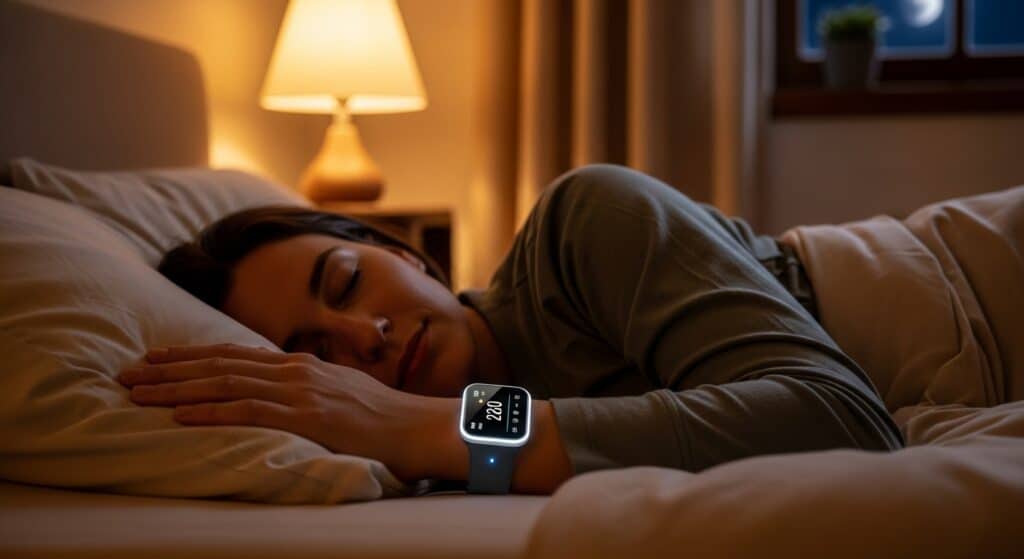
Home-based sleep apnea test devices allow you to undergo this monitoring in your own bed, where you sleep most naturally, offering a significant comfort advantage over in-lab studies. Devices vary in their sensor technology, placement on the body, and data comprehensiveness, making it crucial to understand these distinctions as you choose the right sleep apnea test device for your situation.
Types of Sleep Apnea Testing Devices Available
When you begin comparing, you’ll encounter several primary categories of sleep apnea test devices. Each type has distinct advantages depending on your comfort needs and diagnostic requirements.
1. Fingertip Pulse Oximeters
-
What they measure: Primarily blood oxygen (SpO2) and pulse rate.
-
Best for: Simple, preliminary screening or ongoing oxygen trend tracking.
-
Limitation: Does not directly measure airflow or breathing effort.
2. Wearable Chest or Wrist-Based Monitors
-
What they measure: Respiratory effort, heart rate, movement, and often oxygen levels.
-
Best for: A more comprehensive overview than oximeters alone, balancing detail with wearability.
-
Example: Devices using accelerometers and effort belts.
3. Full Home Sleep Test (HST) Kits
-
What they measure: The most comprehensive data set: airflow (nasal cannula), respiratory effort (chest/abdominal belts), oxygen levels (finger sensor), heart rate, and body position.
-
Best for: A diagnostic-grade assessment that closely mirrors in-lab study channels.
-
Consideration: More components, but provides the data most sleep specialists prefer for diagnosis.
Many users initially lean toward a handheld or fingertip sleep apnea test device for its simplicity and minimal feel during sleep. Others prioritize a multi-sensor unit that captures concurrent airflow, movement, and oxygen saturation for a complete picture. Your choice ultimately balances comfort, convenience, and the depth of information you and your doctor require.
The Critical Factor: Accuracy and Clinical Validation
The most important criterion when choosing a sleep apnea test device is its proven accuracy. A convenient but unvalidated tool cannot deliver dependable results. Here’s what to verify:
-
Look for Clinical Validation: Choose devices that have undergone peer-reviewed comparison studies against the gold standard, in-lab polysomnography (PSG). This clinical alignment ensures the data reflects true sleep events.
-
Check for FDA-Clearance or Equivalent: Regulatory clearance indicates the device meets stringent safety and efficacy standards for diagnostic use.
-
Understand the Review Process: How is the data interpreted?
-
Automated Scoring: Algorithms analyze the data. Faster, but may miss nuances.
-
Board-Certified Physician Review: A sleep specialist interprets the raw data. This human-over-the-loop approach significantly increases reliability and reduces misinterpretation risk.
-
When diagnostic certainty is the goal, a sleep apnea test device that includes physician interpretation makes a decisive difference in actionable outcomes.
Comfort and Wearability: Sleeping With the Device
You’ll be wearing this equipment for an entire night, so comfort isn’t a luxury, it’s a necessity for obtaining usable data. Discomfort leads to poor sleep, frequent adjustments, or early removal, all of which can corrupt your results.
-
Fabricate Sensitivity: If you’re sensitive to straps or adhesives, a minimalist fingertip sleep apnea test device may be preferable.
-
Weight and Profile: Lightweight, low-profile designs are less likely to disrupt your natural sleep movements.
-
Ease of Application: A well-designed sleep apnea test device for home use should be intuitive to put on and remove without assistance.
If you already struggle with insomnia or light sleep, choosing a sleep apnea test device that feels unobtrusive is critical for a successful test night.
Ease of Use and Setup: Simplicity Reduces Error
A complicated setup introduces user error, which can lead to an invalid test and the need for a costly redo.
Prioritize devices that offer:
-
Clear, Step-by-Step Instructions: Provided via illustrated guides, video tutorials, or integrated mobile app walkthroughs.
-
Quick Assembly: Setup should take just a few minutes.
-
Connection Verification: Look for devices with clear visual or auditory signals confirming sensors are working properly.
A sleep apnea test device that anyone can set up confidently, without technical expertise, dramatically increases the odds of a successful first-attempt evaluation.
Data Reporting and Turnaround Time
After the test night, you want clear, timely results to proceed with next steps.
-
Reporting Speed: Turnaround varies. Some systems provide automated results within 24 hours; others requiring physician review may take 3-7 business days. Faster reporting accelerates your path to treatment.
-
Report Clarity: The generated report should be comprehensive yet easy to understand. Look for reports that visually graph your:
-
Apnea-Hypopnea Index (AHI)
-
Oxygen desaturation patterns
-
Snoring intensity
-
Body position correlations
-
Heart rate trends
-
A good report doesn’t just present data; it translates it into an understandable narrative about your sleep.
Final Thoughts
Selecting the right sleep apnea test device becomes straightforward when you systematically evaluate your options against the pillars of clinical validation, comfort, ease of use, and report quality. These elements collectively determine the reliability of your results and the smoothness of your experience.
Begin your journey with clarity. For a zero-commitment starting point, take our free AI Face Scan to assess your sleep apnea risk in 60 seconds. For a comprehensive, physician-interpreted diagnosis, explore our FDA-cleared home sleep apnea test, the choice for those who will settle for nothing less than clinical-grade accuracy from the comfort of home.